
How to talk about desires and boundaries in sex - Without Awkwardness

Many couples don’t get stuck because they lack attraction. They get stuck because talking about intimacy feels uncomfortable. The good news: discussing desires and boundaries doesn’t have to be heavy or awkward. With the right approach, it can feel natural, respectful, and even playful.
Why this conversation matters
When you communicate clearly:
anxiety drops (“What will they think?”)
trust and emotional safety rise
boundaries become clearer (which makes pleasure easier)
you explore without guesswork or regret
Most importantly, communication doesn’t ruin the mood. Often, it creates it.
Choose the right moment
Have this talk outside the heat of the moment:
during a relaxed walk
at home with coffee or a drink
after a movie when you’re both calm
or by text if that feels easier at first
Avoid starting the topic when either of you is stressed, exhausted, or right after conflict.
The game-changing rule: speak from “I”
Replace “You never…” with “I feel / I enjoy / I’d love…”
Examples:
“I really enjoy when… and I’d love to do it more often.”
“I feel safest when we talk before trying something new.”
“I want to share what turns me on—no pressure to do it right now.”
It lands as honest sharing, not criticism or demands.
A simple tool: Yes / No / Maybe
Make it light and easy. Each person lists 5 items in each category:
YES: things you enjoy and feel comfortable with
NO: hard boundaries (no explanation required)
MAYBE: things you might try with the right conditions (slowly, with limits, in a certain vibe)
“Maybe” is powerful because it invites exploration without pressure.
How to set boundaries without rejecting your partner
A boundary isn’t rejection—it’s self-care. Try:
“I’m not comfortable with that, but I appreciate you sharing it.”
“I’d prefer something gentler. Can we go step by step?”
“That’s a ‘no’ for me, but I want us to find something that works for both of us.”
What if you hear “no” to something you want?
Don’t take it personally. Ask neutrally:
“Is it a ‘no in general’ or a ‘not right now’?”
“Would anything make it feel safer, or should we drop it?”
If it’s a clear no, respect it. That maturity builds trust—and trust builds better intimacy.
Agree on a “signal” for the moment
Even with desire, something might not feel right mid-way. A simple signal helps:
a word like “pause” or “slower”
a 1–10 scale (“I’m at a 6, let’s soften it a bit”)
No drama—just comfort and clarity.
Quick checklist
Talk outside the moment
Start with something positive (“I love when…”)
Ask, don’t assume
Make “no” safe and respected
Try 1–2 ideas at a time
Aim for safety and connection, not perfect agreement
Bottom line: Confidence comes from comfort. When you can talk openly, intimacy becomes more natural, creative, and truly shared.
Related Articles

Body Neutrality and Sex: You Don't Have to Love Every Part of Your Body
Sexual confidence does not require loving every inch of your body. Body neutrality offers a calmer way to approach appearance, intimacy and pleasure.

Responsive vs Spontaneous Desire: Why We Don't All Want Sex the Same Way
Sexual desire does not always appear out of nowhere. Learn the difference between spontaneous and responsive desire and why both can be completely normal.

Penis Extenders: How to Choose the Right One for You
Penis extenders can temporarily add length and girth during use, but different designs offer very different sensations and fits. Learn what to consider and compare Elite Uncut, Tenacity and Thrive.

Rumbly vs Buzzy Vibrations: A Guide for Beginners
Exploring rumbly vs buzzy vibrations in sex toys can enhance your intimate experience. Learn how different vibrations feel, how to choose the right products and what factors affect sensation. This beginner's guide offers practical advice on selecting toys based on your personal preference and sensitivity.
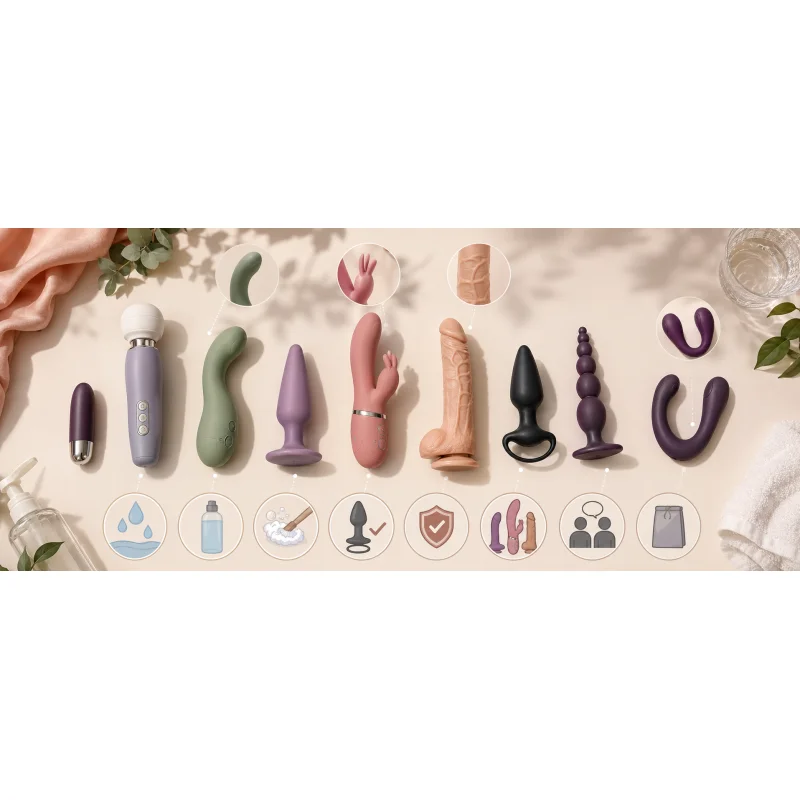
Sex Toy Shapes: The Complete Guide for Beginners
Exploring sex toy shapes can be a delightful journey for beginners. Understanding how shape affects stimulation, comfort and use is key to finding the perfect match for your desires.
Join Our Newsletter
Get the latest tips and exclusive offers.